
Social Security Disability
How to Change Your Social Security Disability Lawyer

You can fire your Social Security disability lawyer and hire a different one at any point in your case, for any reason, without asking anyone’s permission. Making that switch take effect, however, requires specific paperwork filed with Social Security.
Social Security places no limit on how many times you can switch and requires no justification for doing so. The right exists at every stage — application, reconsideration, hearing, Appeals Council — and it does not depend on how long your current attorney has been on the claim.
A note on wording, because it causes confusion. Social Security calls this revoking the appointment of a representative. Most people call it firing their lawyer. They are the same act, and the agency does not treat one as more serious than the other. Social Security says representative rather than lawyer because a representative does not have to be an attorney — non-attorney representatives handle disability claims as well, and everything below applies to them the same way.
The usual reason people start looking for a new lawyer is silence. Months pass without a call returned, and the claimant has no clear sense of what stage the case is in or what, if anything, has happened to it.
The mistake that causes the most trouble is assuming a phone call settles it. Telling your lawyer you are finished does not remove them from Social Security’s file. Social Security acts on what it receives in writing, not on what was said on a call, and claimants often learn this only months later, when a check comes late or a form arrives from someone they thought they had already left.
When Switching Lawyers Makes Sense
Three situations account for most switches that turn out to be the right call. The first is a sustained period with no contact and no returned calls — not a single missed callback, but a pattern stretching over weeks or months. The second is a hearing approaching with no preparation behind it: no request for a statement from a treating doctor, no sign the file has been reviewed, no contact from the lawyer as the date gets close.
The third is signing with a national advertiser or a firm that handles claims in volume, then never speaking with the same person twice. Some claimants cannot say who is actually working their file, only that a company somewhere has an appointment on record. That is reason enough to look elsewhere.
When It Is the Wrong Move
Firing a lawyer days before a scheduled hearing is usually the wrong move. A new attorney needs time to read the file, and if the hearing is only days away, that often means asking the judge for a postponement, which can add months to a case that was already close to a decision.
Disagreement about strategy is not the same as neglect. A lawyer who declines to raise a particular argument, or who recommends against requesting a specific medical opinion, may have a sound reason grounded in the case rather than indifference to it. Ask for an explanation of that reasoning before deciding to leave. The answer sometimes resolves the disagreement without a change being necessary. If the decision was not yours and your representative withdrew, that situation works differently.
How to Fire Your Lawyer and Appoint a New One
Ending one appointment and starting another is handled through paperwork filed with Social Security. The agency needs three specific documents before its records reflect the change, and the case does not move to the new representative until it has all three.
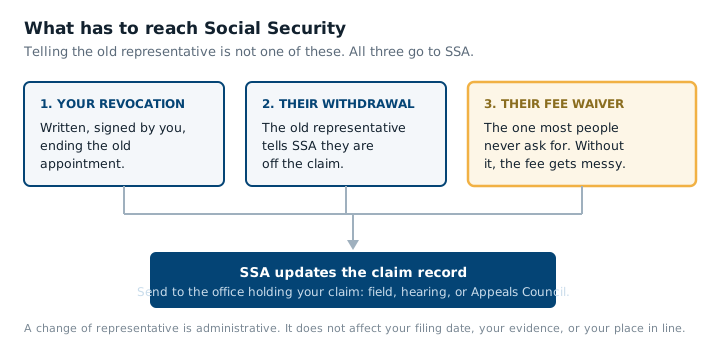
The first is the claimant’s written revocation of the prior appointment, sent to Social Security rather than only communicated to the prior representative. The second is the prior representative’s own withdrawal, which the agency generally expects as well. The third is the one claimants rarely know to ask for: the prior representative’s fee waiver, a written statement giving up any claim to a fee. Skipping it does not stop the change from happening, but it changes what happens to the fee, covered below.
Which office receives the paperwork depends on the stage of the claim. A claim still at the application stage goes to the local Social Security field office. A claim awaiting or in the hearing process goes to the hearing office, known as OHO, handling it. A claim under review after a hearing goes to the Appeals Council. The stage a claim has reached also determines a great deal about its odds, as Arizona approval rates by stage show. Sending the documents to the wrong office has practically the same effect as not sending them at all, because the office that needs the update never receives it.
Appointing the new representative is done on Form SSA-1696, signed by both the claimant and the new representative. It is a short form, and most disability lawyers have it ready before the first meeting ends.
What It Does to the Fee
Fees in Social Security cases work the same way regardless of how many representatives have been involved. A representative is paid the lesser of 25 percent of past-due benefits or $9,200 — a figure that has been in effect since November 30, 2024 and does not rise automatically — and only if the claim is won, with Social Security’s approval. There is no fee if the claim is lost.
A second representative on file complicates that only if the first one’s fee status is left unresolved. Under the fee agreement process, every representative appointed on a claim has to sign the same fee agreement. If a prior representative is still on record and has not waived the fee, Social Security will disapprove the agreement, and both representatives are required to file fee petitions instead — itemized statements of the work each performed, reviewed individually rather than approved automatically, and considerably slower than the standard fee agreement.
None of this means the claimant pays twice. The 25 percent cap applies to the total fee across every representative on the claim, however it ends up divided. What an unresolved prior appointment actually costs is time: past-due benefits sit while Social Security works out how the fee is allocated, which delays the payment rather than increasing it. Getting the waiver in writing at the time of the change is what avoids that delay, which is worth asking for even when the parting is amicable. If the prior representative will not agree to it, what happens when a former lawyer will not waive the fee covers the process and your rights in it.
What Does Not Change
A change in representation does not touch the claim itself. The application date and protective filing date carry over exactly as they were, so back pay keeps accruing from the same date it always did. Medical evidence already submitted stays in the file; nothing has to be resubmitted because a new name is on the appointment. And a hearing that is already scheduled usually stays on the calendar — changing representatives does not, by itself, restart the process leading up to it.
Timing
Switching lawyers is straightforward before Social Security issues a decision. It gets harder afterward, once a favorable decision has issued and past-due benefits are being withheld and allocated among whoever has a claim to a fee. The paperwork above still has to happen; it is unwinding something already in motion rather than heading it off.
Switching does not pause any deadline already running against the claim, including the 60 days to appeal a denial. If a deadline is close, put the revocation and the new appointment in motion immediately rather than waiting for the paperwork to feel finished.
The riskiest window is the few weeks immediately before a scheduled hearing. A lawyer newly on the file may need more preparation time than the calendar allows, and asking the judge to postpone can add months to a wait that is already long at Arizona hearing offices. Weigh that cost against whatever prompted the change.
If You Do Not Know Which Lawyer Is on Your Claim
There are three ways to find out which lawyer is on your claim. Social Security’s notices list the appointed representative by name, so a recent notice is the fastest check. Social Security can also confirm who is on file over the phone. A newly appointed representative can check the electronic file directly, which settles the question definitively. Each route is set out in how to find out who is representing you.
It is common to find an appointment on file for a representative the claimant has not heard from in years, often a national advertiser or advocacy company signed early in the process, before the claimant knew what the case would actually require. That appointment does not expire on its own. It sits on the claim until someone files the paperwork to remove it, which is fixable the same way any other change is: in writing, to Social Security, with the three documents above.
What to Do
Firing one lawyer and hiring another is an administrative step that Social Security handles routinely, and it is finished only when the agency has the paperwork in hand. A phone call to the old office does not accomplish it, however clearly it is stated. For more on how these claims work generally, see our answers to common questions about Social Security disability claims, or the overview of representation on your claim.
- Find out who is currently on file with Social Security.
- Put your revocation of the prior representative in writing to Social Security.
- Ask the lawyer you are firing to withdraw and to waive their fee.
- Sign Form SSA-1696 with the new representative.
- Confirm with Social Security that its records reflect the change.
If you are switching to a new lawyer rather than leaving the old one without a replacement, a free case review is a reasonable place to start. It gives you a chance to ask about the file before signing anything.